“Self-Defence” Isn’t a Marketing Word. Stop Using It Like One.

Self defence not marketing for martial arts

Walk past almost any karate, taekwondo, kung fu, boxing, kickboxing, or BJJ school and you’ll see the same banner in the window: “Self-Defence Classes for All Ages.”

It’s a nice sentence. It sells memberships. Parents feel better. Kids feel tougher. Everyone leaves happy.
There’s just one problem: for most schools running that banner, it isn’t true.

Not because the instructors are lying on purpose. Most of them genuinely believe it. That’s what makes this worth talking about — this isn’t an attack on martial arts. It’s a question about what happens when a discipline built for one purpose gets sold as something else entirely.

Sport, Art, and Combat Are Not the Same Thing

Karate, taekwondo, kung fu, boxing, kickboxing, and BJJ all came from real fighting systems, decades or centuries ago. But most of what’s taught in a suburban gym or dojo today isn’t that raw system anymore. It’s a descendant of it, filtered through:

  • Sport rules (point sparring, no groin strikes, no eye strikes, no ground fighting, stop at first contact)
  • Grading syllabuses (kata, patterns, forms — performed solo, against no one)
  • Tradition and lineage (bowing, belt systems, terminology in a language most students don’t speak)
  • Family-friendly liability (six-year-olds and forty-year-olds in the same non-contact class)

None of that is bad. Sport karate is a legitimate sport. Forms and kata are a legitimate art form and a genuine test of discipline, memory, and body control. 

Traditional lineage matters to a lot of people for good reason.

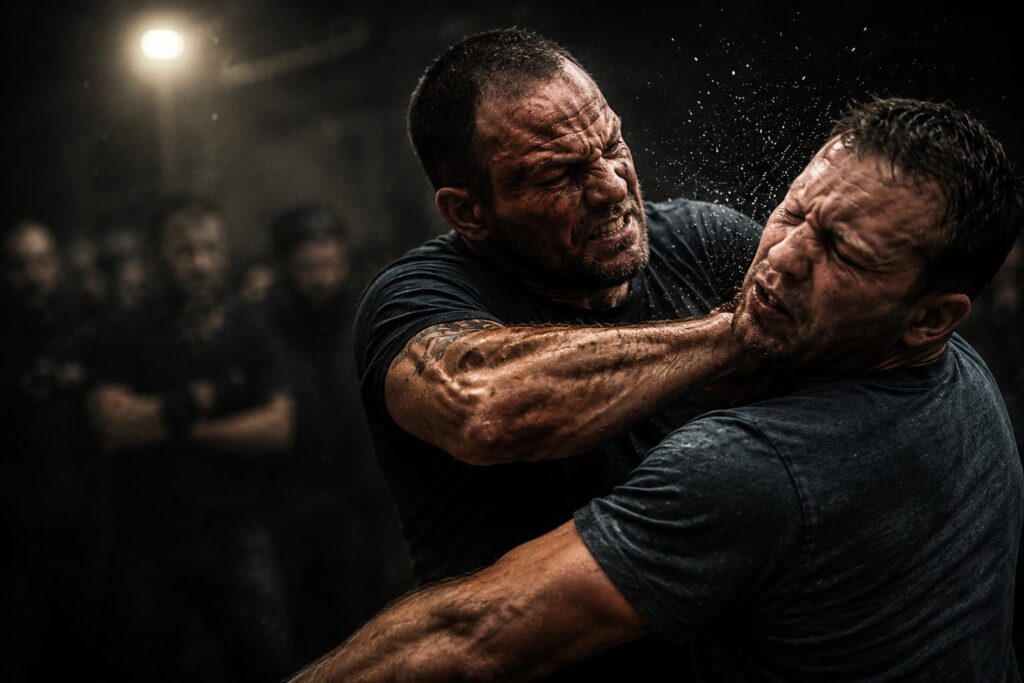
But none of it was built to answer the question: what do you actually do when a stranger grabs you by the throat in a car park with no rules, no ref, and no room to reset?

And if you don’t know the answer to that question, ask yourself what is missing in your training?

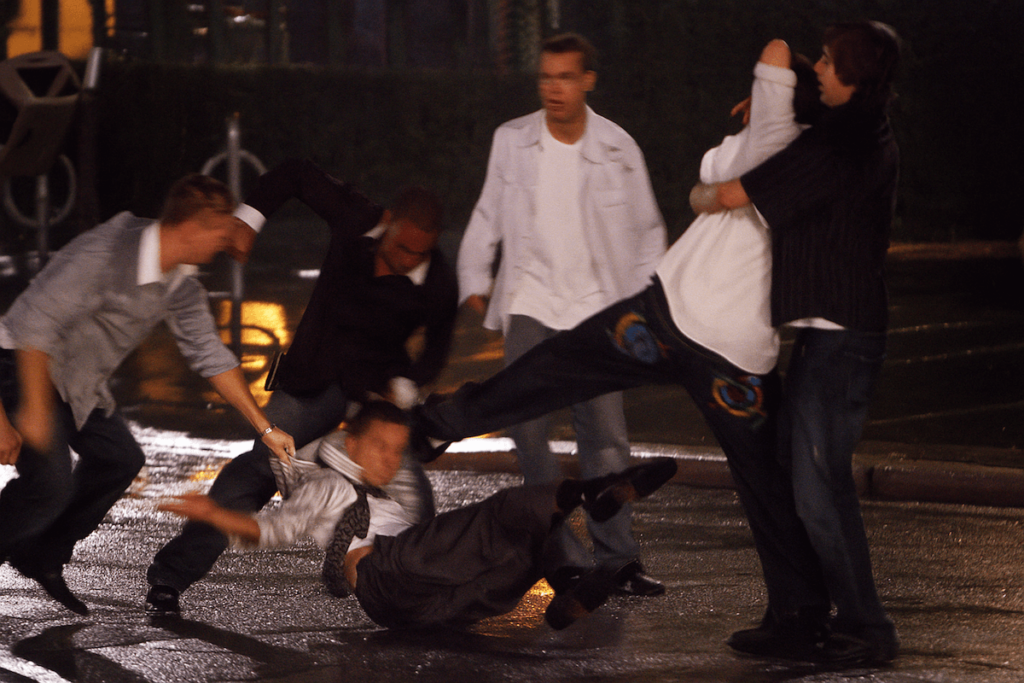
Multiple attackers self-defence isn't martial arts

The Giveaway: Compliance

Here’s the simplest test for whether training is “self-defence” or just labelled that way — does anyone in the room ever resist you, at real speed, with real intent?

In most traditional self-defence segments, the answer is no. It’s choreography: the attacker throws one committed, telegraphed strike and freezes. The defender performs a technique. Nobody hits back. Nobody grabs again. Nobody adjusts. It looks clean because it’s rehearsed, not because it works.

Real aggression is not one strike and a freeze. It’s messy, close, fast, and it keeps coming. A system never tested against that kind of pressure hasn’t been tested at all — it’s been demonstrated.

Why This Actually Matters

This isn’t a “my style is better than your style” argument. It’s a consumer protection argument.

When a school tells a worried parent, a domestic violence survivor, or a nervous first-time student that they’re learning “self-defence,” that student walks out the door believing something specific: if this happens to me, I will be able to handle it.

That’s a serious promise. 

If the training underneath it is actually built for grading, points, or performance — not for chaos, adrenaline, and non-compliant resistance — the promise is false advertising, even when it’s unintentional.
 

The cost of that gap isn’t found in the dojo. It’s found in the moment the training is supposed to matter, when someone freezes because nothing in their experience prepared them for what real aggression feels like.

atm assault - self-defence works not martial arts like bjj, boxing, kickboxing

Boxing, Kickboxing, and BJJ Are a Different Problem

Everything above is about training that never gets pressure-tested at all. Boxing, kickboxing, and Brazilian Jiu-Jitsu are a different case — and, to their credit, a harder one to argue with. 

These are combat sports, and their practitioners genuinely spar and roll against a fully resisting opponent, at real speed, under real pressure. That’s not choreography. Anyone who’s boxed a decent amateur or rolled with a purple belt knows exactly how honest that kind of pressure is.

The gap isn’t compliance. It’s context. 

All three are shaped by the fact that they’re sports, contested under a fixed ruleset, against one opponent, on a mat or in a ring, inside weight classes, with a referee who stops things before real damage happens:

  • Boxing trains world-class striking — but only with the hands, only standing, and it says nothing about what to do if someone grabs you, takes you down, or pulls a knife.
  • Kickboxing adds kicks and knees, but keeps the same one-on-one, ref-controlled, striking-only frame.
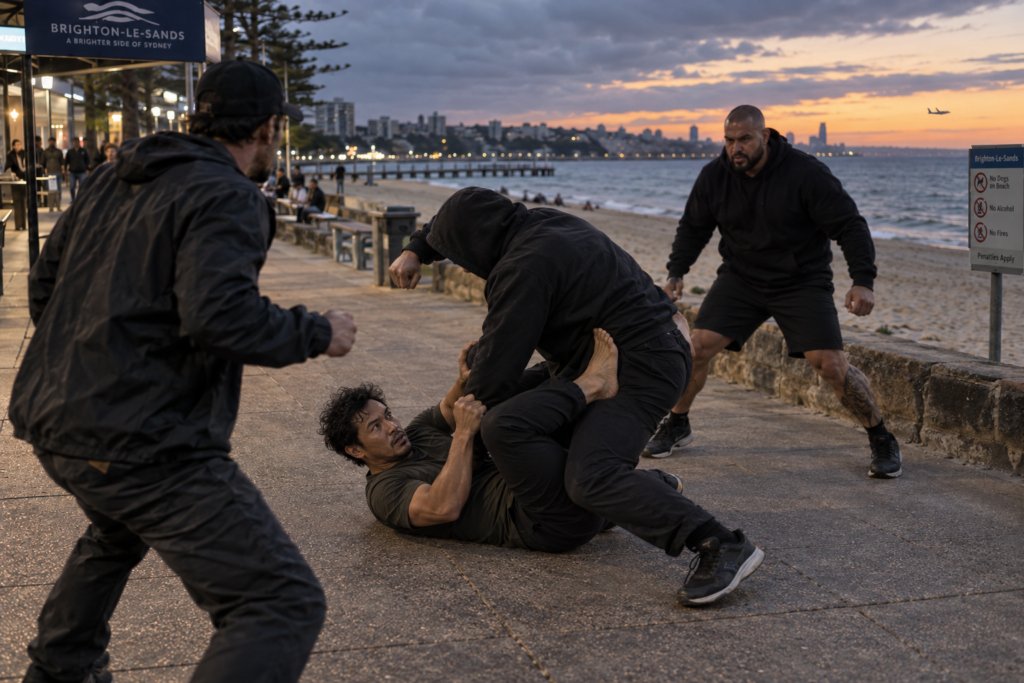
  • BJJ builds genuinely elite grappling and control — but the entire sport assumes one attacker, no strikes to the face while on the ground, no weapons, and a soft mat to fall on. Voluntarily going to the ground with a stranger in a car park, or against a second attacker, is a very different proposition to pulling guard against a single opponent in a gi.
None of that makes these sports lesser — they build some of the best real-world tools available: composure under pressure, genuine work rate, timing, distance, and the ability to take a hit without falling apart. That’s a huge head start over someone who’s only ever thrown a technique into thin air. But a head start isn’t the whole race. “I box” or “I roll BJJ” is not the same claim as “I’ve trained for a multi-attacker ambush, a weapon at close range, or being blindsided from behind with no rules and no ref to step in.” Sold as fitness and competition, boxing, kickboxing, and BJJ are exactly what they say on the tin.
Sold as complete self-defence, they leave out the exact things a real attack is likely to include — weapons, multiple attackers, eye gouges, groin strikes, biting, fighting on concrete — because those are the very things the sport’s rules exist to remove.

What Actual Self-Defence Training Looks Like


Reality-based self-defence training — the kind Krav Maga was designed around — is built backwards from the traditional model. It doesn’t start with “here is a beautiful technique,” it starts with “here is what actually happens in violence,” and works out from there:
Non-compliant partners. People resist, grab back, and don’t stop after one strike.

  • Adrenaline and stress inoculation. Training under a raised heart rate, not a calm, quiet room.
  • No rules, because attackers don’t follow any.
  • Groin, eyes, throat — all on the table, because a real attacker isn’t refereed.
  • Scenario training. Multiple attackers, weapons, close range, being ambushed from behind, being on the ground — the actual shapes violence takes, not the shapes a syllabus takes.
  • Simplicity over elegance. Gross motor skills that still work when your hands are shaking, not fine motor sequences that only work in a calm demo.
  • It’s not prettier. It’s often not even fun to watch. But it’s built for the thing it claims to prepare you for.

The Point Isn’t to Bash Any of These Arts or Sports

Kung fu, karate, taekwondo, boxing, kickboxing, and BJJ all have real, legitimate value — discipline, fitness, focus, tradition, community, confidence, coordination, genuine athletic skill under pressure. All genuinely good reasons for a kid or an adult to walk through those doors.

The issue is purely the label. Call it what it is. “Martial arts for discipline and fitness” or “boxing for fitness and competition” are honest, valuable pitches. 
 

“Self-defence” is a specific promise about specific outcomes in a violent encounter — and that promise should only be made by training that’s actually been built and tested against non-compliant, high-pressure resistance, in the messy, ruleless, multi-variable conditions real violence actually takes.

If your child, partner, or student is walking out of a class believing they can handle a real attack, the training behind that belief owes them the truth about whether that’s actually the case.

Violence doesn’t check your belt colour, your win-loss record, or which mat you learned on. It doesn’t wait for you to reset your stance, and it definitely doesn’t stop after one clean strike. 

If your training has never made you feel even a fraction of that chaos, you haven’t been preparing for a real attack — you’ve been rehearsing for one that was never going to happen the way you practised it.

That’s the whole reason SGS Krav Maga exists. We don’t grade you on how clean your form looks against thin air, and we don’t hand you a trophy for landing a point under a referee’s whistle. We put you under pressure, against people who actually resist, in scenarios built to fall apart — because that’s what a real attack does. No rules, no ref, no reset.

Train for the fight you might actually get. Not the one that’s easiest to put in a brochure. Embrace Chaos.
STOP READING. START TRAINING.

BOOK YOUR FREE TRIAL SELF DEFENCE CLASS TODAY

SGS KRAV MAGA BLOG POSTS